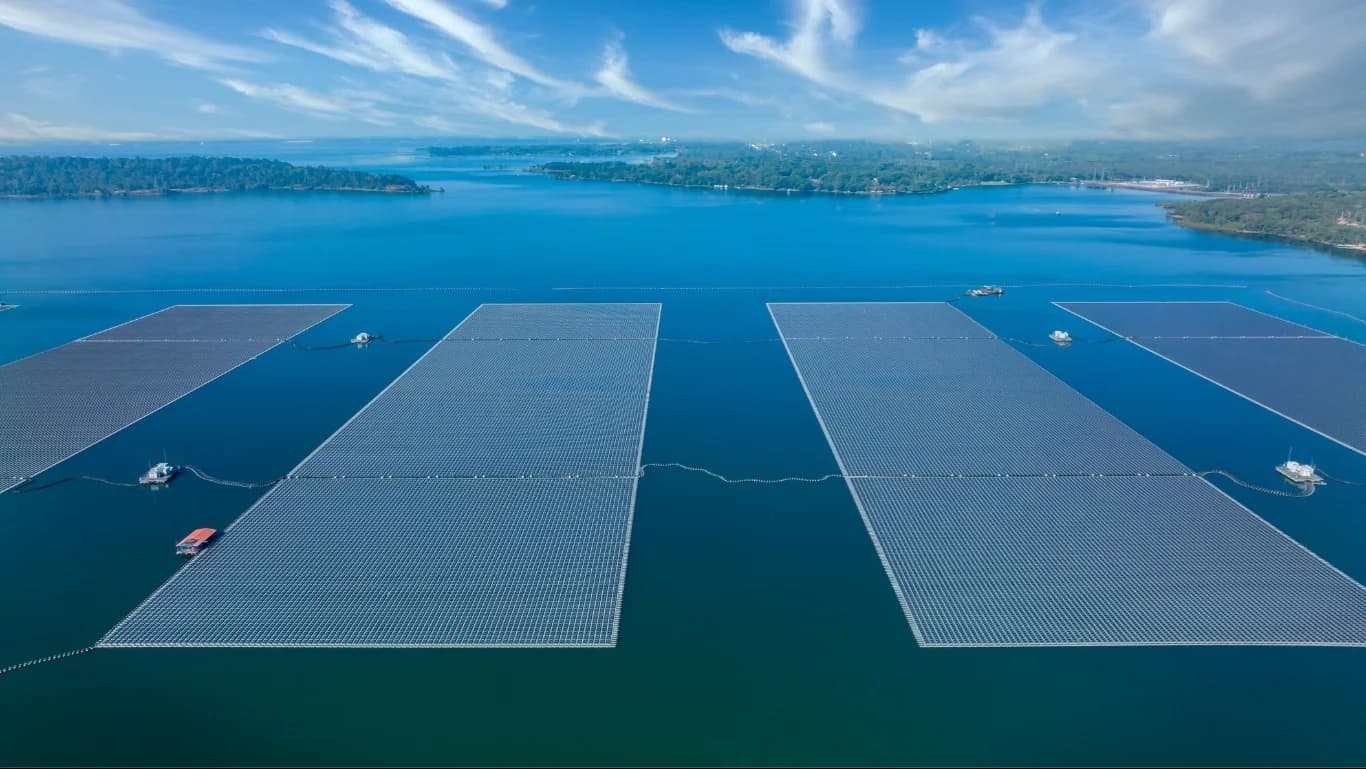
A floating solar power plant, sometimes called floatovoltaics, is a solar plant built on water instead of land. The modules sit on buoyant platforms, usually made of high-density polyethylene floats, which are anchored or moored to the bed or banks of a reservoir, lake, pond or quarry lake. Power is carried to shore by floating or submerged cables to inverters and a substation on land.
Why build on water?
- No land to buy: in densely populated regions, land near the grid is expensive and contested. Reservoirs, irrigation ponds and water-treatment lagoons are already there, often next to existing grid connections.
- Cooler modules: modules over water tend to run cooler than modules on hot ground. Because a module's output falls as its temperature rises, cooler modules produce more energy from the same sunlight.
- Less evaporation: covering part of a reservoir shades the water and reduces evaporation, which matters in dry regions.
- Sharing infrastructure: a floating plant on a hydropower reservoir can share the dam's grid connection, and the two sources complement each other through the day and the seasons.
The challenges
- Anchoring and mooring: the platform must stay in place through changing water levels, wind and waves. Mooring design is one of the biggest engineering tasks.
- Wind loads: a large, flat floating array presents a big surface to the wind, and its structures and moorings must be designed for the local extreme wind speeds.
- Humidity and corrosion: constant moisture is hard on connectors, cables, metal parts and electronics, which need suitable materials and sealing.
- Operation and maintenance: cleaning modules, replacing parts and inspecting cables all happen from walkways or boats.
- Environment: covering too much of a water body can affect light, oxygen and life in the water, so coverage and environmental effects have to be assessed for each site.
- Lower tilt: floating modules are usually mounted at low tilt angles to reduce wind load, which changes both energy yield and how quickly rain washes dust off.
What to measure on a floating plant
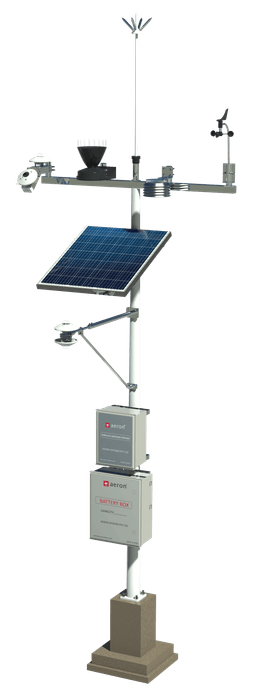
A floating plant is judged the same way as one on land: by comparing the energy it produced with the energy it should have produced given the weather. The weather on water is different, and some of the benefits of floating solar, such as cooler modules, can only be proven by measuring them. A weather monitoring station for a floating plant should cover:
- Irradiance on the horizontal and in the plane of the modules, with the sensors mounted so that the platform's movement does not distort the reading;
- Module temperature, to show the cooling effect of the water and to correct performance ratio for temperature;
- Air temperature and relative humidity, which run high over water;
- Wind speed and direction, for structural safety as well as cooling;
- Soiling, since bird droppings are a common problem on water bodies and low-tilt modules clean less well in the rain.
The equipment must also suit the location. Components should have strong ingress protection against moisture, and data should reach shore reliably: through a cable, or over Wi-Fi or 4G LTE to a monitoring platform, with enough local storage to survive a break in the connection.
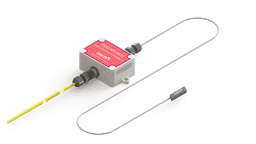
Aeron's weather monitoring stations for solar plants are built for IEC 61724-1:2021 Class A monitoring, with sensors, data loggers and communication chosen for each site. Our air temperature and humidity sensor has a stainless steel body and IP65 protection, the Rigel 2 module temperature sensor is IP65 with an aluminium body, and the Xtreme data logger keeps readings on internal memory with an SD card slot and sends them over Ethernet, Wi-Fi or 4G LTE.
Is floating solar right for a site?
Floating solar usually costs more to build per megawatt than a comparable ground-mounted plant, because of the floats and moorings. It makes sense where land is scarce or expensive, where a suitable water body already exists near a grid connection, and where the cooler operating temperature and reduced evaporation add value. A feasibility study should look at water depth and level changes, wind and wave conditions, the bed and banks for anchoring, water use and environmental rules.
Once a plant is built, good measurement is what shows whether it delivers the yield it was designed for. To talk about monitoring for a floating plant, contact our team.