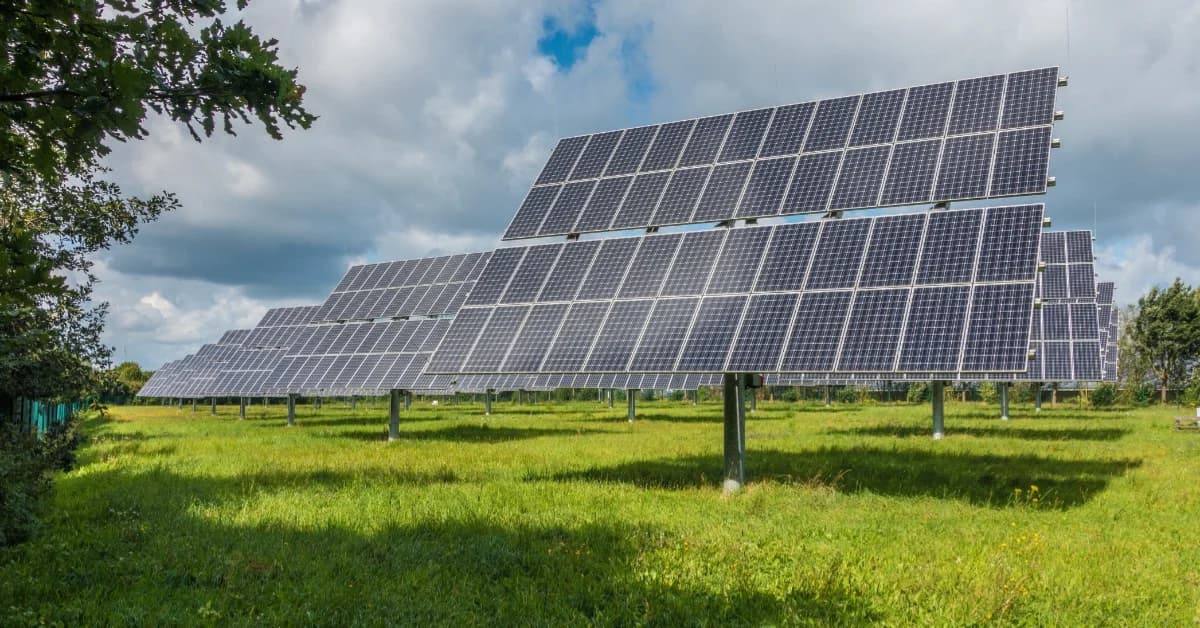
A conventional solar module collects light on its front face only; its back is an opaque sheet. A bifacial module has cells that can use light from both sides, and a transparent back, usually glass or a clear backsheet. The front still does most of the work, but light reflected from the ground and scattered by the sky reaches the rear and adds to the output. On the right site, that extra energy comes at little extra cost, which is why bifacial modules have become common on utility-scale plants.
How much extra energy?
Two things decide the rear-side gain.
- Bifaciality: how efficient the rear of the module is compared with the front, stated on the module datasheet as a bifaciality factor. A factor of 0.7 means the rear converts light at 70% of the front's efficiency.
- Rear irradiance: how much light actually reaches the back. This depends mainly on the ground's albedo (the share of sunlight it reflects), the height of the modules above the ground, the row spacing, and how much of the back is shaded by the mounting structure.
Albedo varies a lot: dark soil or grass reflects little, dry sand and light gravel more, and fresh snow most of all. So the same module can give a small gain on one site and a large one on another. The gain is also usually larger on single-axis trackers with modules mounted high above bright ground than on low, fixed-tilt racks.
Designing for the rear side
- Raise the modules: more height lets more reflected light reach the back and spreads it more evenly.
- Keep the back clear: torque tubes, rails and junction boxes that shade the rear cost energy. Some tracker designs are made for bifacial modules for this reason.
- Consider the ground: some plants use lighter ground cover to raise albedo.
- Allow for mismatch: the rear is lit less evenly than the front, which creates small losses between cells and modules.
Why bifacial plants need better measurement
To judge whether a plant is performing, its owner compares the energy it produced with the energy it should have produced given the weather. For a monofacial plant, front-side (plane-of-array) irradiance is most of that story. For a bifacial plant it is not: if rear irradiance is not measured, the plant's expected output is underestimated, and a real fault can hide inside an unexplained "bifacial bonus", or a normal plant can look like it is underperforming.
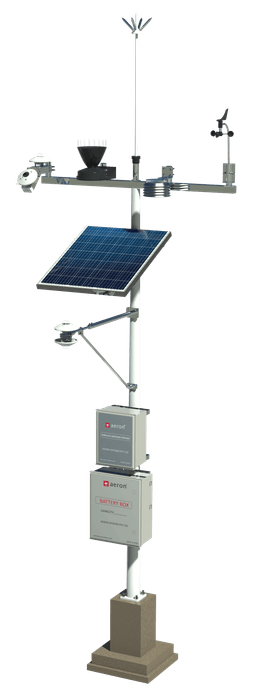
IEC 61724-1:2021, the standard for PV performance monitoring, includes measurement of albedo and rear-side irradiance for bifacial systems. A monitoring station for a bifacial plant therefore typically adds:
- a ground-facing pyranometer, paired with a sky-facing one to form an albedometer, to measure albedo;
- rear-side irradiance sensors mounted in the plane of the modules, facing backwards;
- module temperature sensors that do not themselves shade the back of the module.
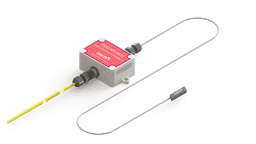
That last point is easy to miss. A temperature sensor glued to the back of a bifacial module blocks rear-side light from reaching the cell beneath it. Aeron's Rigel 2 module temperature sensor is built for this: its low-profile, 7.2 mm body mounts flush on the rear surface without obstructing rear-side irradiance, and its PT1000 element meets the IEC 60751 Class A tolerance. It is available with 4-20 mA, PT1000 and RS485 Modbus outputs.
Temperature and bifacial modules
Bifacial modules with glass on both sides often run at a slightly different temperature from conventional modules, because the glass back sheds heat differently and absorbs light on both faces. Since a module's output falls as it gets hotter, accurate module temperature is part of modelling the plant correctly, and should be measured on the modules actually installed rather than assumed.
Is bifacial right for a project?
Bifacial modules usually cost a little more than monofacial ones, and the benefit depends on the site's albedo, the mounting and the tracker. A project team should model the rear-side gain for its specific site and structure, then, once the plant is running, measure albedo and rear irradiance to confirm the gain it paid for. That measurement is also the evidence lenders and independent engineers look for.
Aeron's weather monitoring stations are built for IEC 61724-1:2021 Class A monitoring, including on bifacial plants. See WMS for Solar PV Plants or talk to our team about your site.